
Best vegan protein powder for runners based on a blind taste test
Updated: Jun 24
By Henry Howard
Finding the best vegan protein powder for runners, cyclists and other endurance athletes means cutting through marketing claims and doing the work yourself. So I did.
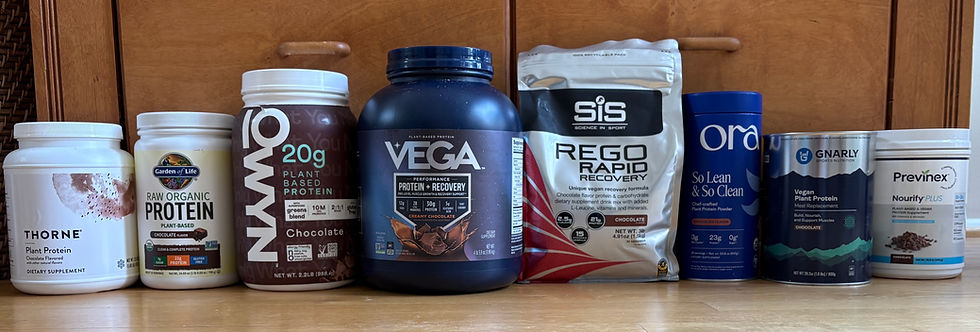
I conducted a vegan protein powder blind taste test to determine the best plant-based protein powder that has been third-party tested and designated with NSF or a similar clean sport certification. I asked my wife to put eight servings of each of the powders into a clear plastic bag, number them and hide the list. Over the course of six or so weeks, I randomly selected the powders, finished one at a time then proceeded to the next one.
During my testing, I took notes on each one including the taste, how it mixed with a greens supplement and/or other powders I regularly use, the texture and more.
Besides being plant-based, I am gluten-free due to a Celiac allergy. In addition to narrowing the field to plant-based, gluten-free protein powders, I also applied other criteria as I selected my options for testing.
As you may recall, a Consumer Reports investigation found elevated lead levels in many protein powders, including plant-based ones. I omitted those that did not fare well in the testing, which were Huel and Momentous.
Additionally, I limited the options to protein powders that have at least 20g of protein per serving. That eliminated others such as Skratch Labs and UCAN, which was outrageously expensive as well. Orgain was among those that was omitted because it lacks independent certification to guarantee the absence of substances banned by sports organizations.
(Like my work? I'd be honored if you'd support me. Consider a donation of any amount, such as a cup of coffee.)
Some previous stories about protein on my RunSpirited website:
Why is protein important to runners?
Here are seven things runners should know about protein.
How to get enough protein on a plant-based diet.
The benefits of protein powders for runners.
The best vegan protein powder for runners

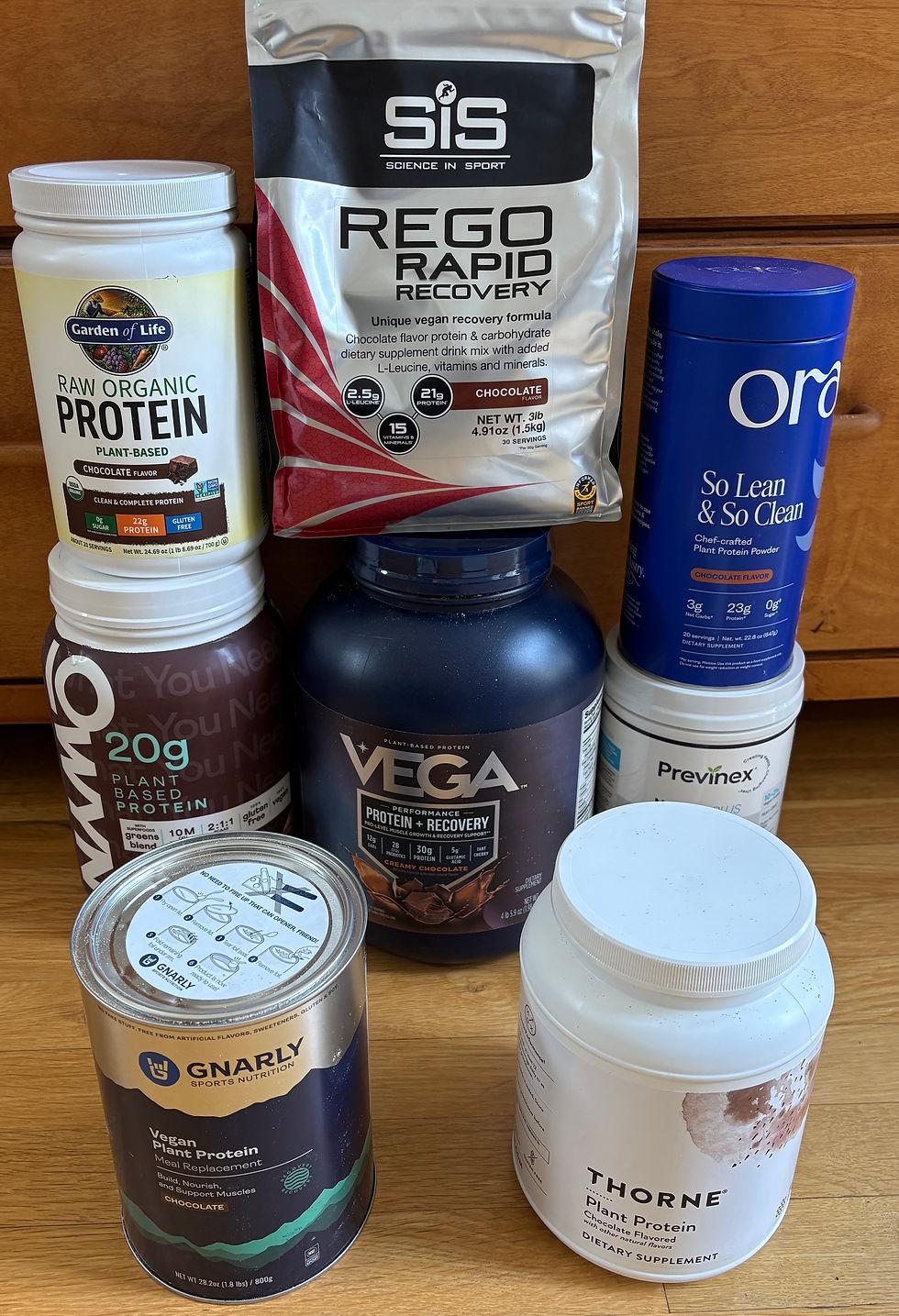
In alphabetical order, my field of eight chocolate protein powders were Garden of Life, Gnarly Nutrition, Ora, Owyn, Previnex, Science In Sport, Thorne and Vega. Upon finishing, two brands clearly stood above the rest.
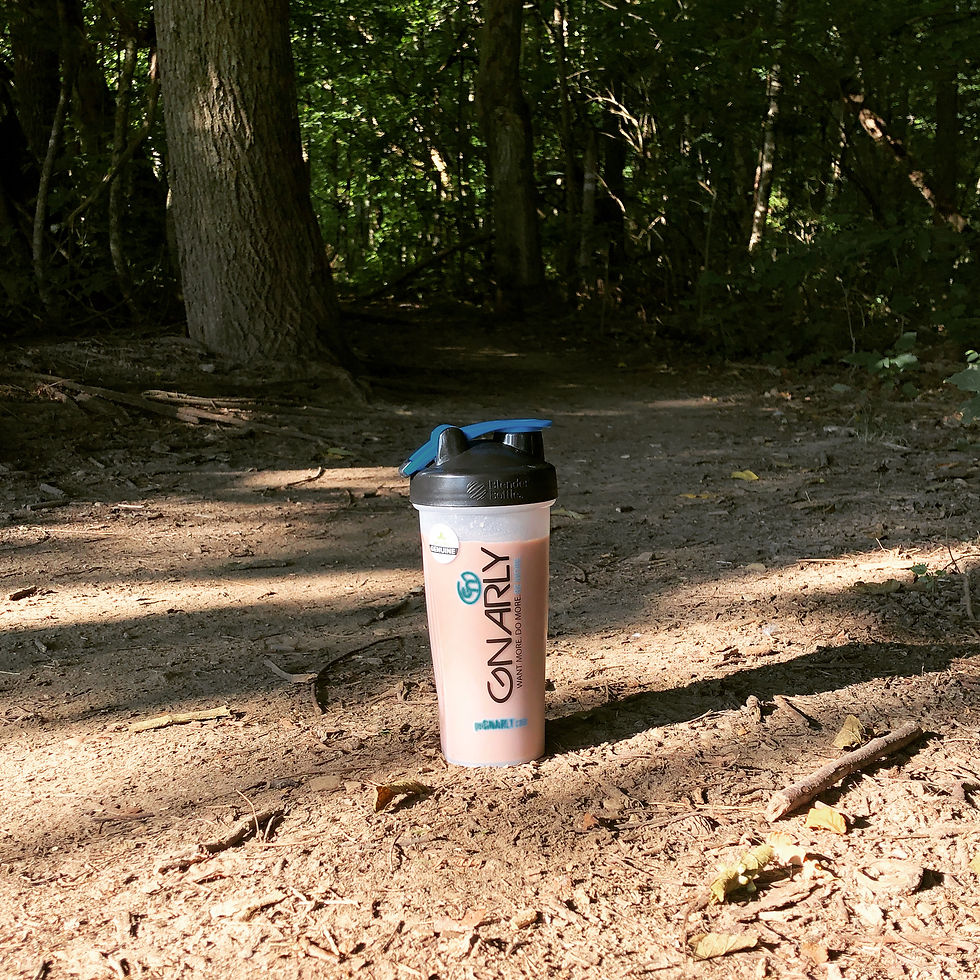
Based on my criteria and blind test, the best vegan protein powder is Gnarly Nutrition.
Gnarly Nutrition: Best plant-based protein powder
Gnarly Nutrition has the best vegan or plant-based protein powder for runners, cyclists and other athletes. Gnarly delivers best-in-class flavor, 20g of carbs and the most fiber of any of those that I tested. It even mixes really well with my greens supplement, amla, and a combination of cacao and ashwaganda powders.
Bottom line: Simply the best. It ranks first in terms of taste, mixes well and is easy to digest. Also notable is Gnarly’s sustainability leadership, as it demonstrates with its environmentally friendly packaging and the fact that it no longer includes a plastic scoop in its products. (Want to try Gnarly? After this analysis was published, Gnarly reached out to me to share this special link for anyone to try their products.)
Calories: 200
Protein: 20g
Carbs: 16g
Sodium: 400mg
Sugars: 3g
Fiber: 7g
Certification: NSF for Sport
Owyn Protein: Pleasant taste, a bit low on carbs
Owyn’s protein powder rates highly because of its pleasant flavor, limited calories and the fact that it mixes well. There is no aftertaste or grainy consistency. I really did not find any downsides to Owyn. Its carbs are less than others, which may also be another point in its favor for some athletes. I wasn’t worried about carb count. To me, this is the second-best option.
Bottom line: Owyn is pretty easily the next-best option for plant-based protein powders with a gap between it and the next group.
Calories: 140
Protein: 20g
Carbs: 8g
Sodium: 300mg
Sugars: 4g
Fiber: 2g
Certification: NSF for Sport
And here are the plant-based protein powders that did not measure up.
Previnex Nourify: High on carbs, sugar and sometimes chalky taste
The Previnex protein powder generally mixes well and has a good taste, better than average. However, it was more prone than the others to have a chalky consistency if not thoroughly shaken and or mixed. Additionally, Previnex has the second most carbs but the most sugar (tied with Thorne) of all the powders I tested.
Bottom line: Previnex says it is third-party tested but does not offer proof of being certified by one of the major outside testing groups. That’s enough for me to pass.
Calories: 230
Protein: 21g
Carbs: 21g
Sodium: 190mg
Sugars: 5g
Fiber: 2g
Certification: Does not have NSF Sport or similar certification. Website says it is “third-party tested.”
Science In Sport: Protein powder high in carbs and very sweet taste
Science in Sport (SIS) Rego Rapid Recovery produces one of my favorite gels, the Beta version that packs in 40g of carbs in an easy-to-consume liquid packet. The SIS Rego Rapid Recovery does not fare as well. It has a sweet taste, but oddly enough is overwhelmed by the greens when mixed together. Also note that while the package says, “unique vegan recovery formula,” the ingredient listing also says, “may also contain milk.”
Bottom line: Science In Sport offers the most carbs in the protein powder tested but is also high in sodium. Still, the most pressing concern is the taste, which is heavily influenced, by what it is combined with. SIS lands squarely in the middle of these options. Good, not great.
Calories: 180
Protein: 23g
Carbs: 23g
Sodium: 475mg
Sugars: 1g
Fiber: 0g
Certification: Informed Sport Certified
Vega Performance Protein and Recovery: Reformulated after Consumer Reports report
Vega has been directly linked to high levels of lead, cadmium and other metals, though this protein powder has been reformulated — and rebranded. Vega has a very strong flavor, overpowering and can be chalky at times. It is also the thickest of the brands I have tried.
In its report, CR wrote that “Vega has paid about $336,000 in penalties to resolve allegations made in 2013 and 2018 that its products contained high levels of lead, cadmium, or other heavy metals without appropriate warning.” Since the Consumer Reports analysis was published, Vega renamed the product tested to Vega Protein and Recovery, and had changed its pea sourcing to North America.
Bottom line: The high sodium count and protein (tops among those I tested) are likely what contributed to a weight gain I experienced while sampling Vega. If you are interested in building muscle, rather than recovering from endurance training, this might be an option to consider.
Calories: 180
Protein: 30g
Carbs: 6g
Sodium: 530mg
Sugars: 1g
Fiber: 2g
Certification: Informed Choice certified and NSF Certified
Garden of Life: Organic protein easily digestible but lacks flavor

Garden of Life is perhaps the healthiest option of the protein powders I tested. But its taste is in the bottom third. Among the reasons why is that is does not mix well, especially with the greens. Even with just water, Garden of Life did not mix very well at all. Though it does come with benefits. Garden of Life Raw Organic Protein says it is easily digestible, thanks to a combination of probiotics and digestive enzymes. Its recipe calls for 14 sprouted legumes, ancient grains and chlorella, as well as 4g of BCAAs (Branched Chain Amino Acids).
Bottom line: If you can get past the below average taste and prioritize being able to digest the protein powder effectively, you may want to try Garden of Life.
Calories: 140
Protein: 22g
Carbs: 7g
Sodium: 360mg
Sugars: 0g
Fiber: 5g
Certification: NSF Certified
Ora: Organic, kosher and tasteless
Ora is organic and kosher, and does not contain any gums, sugars, artificial flavors or sweeteners. It is perhaps the cleanest of all the proteins I tested. However, its taste was on the lighter, watery side. In fact, when I mixed my greens supplement in with Ora protein and water, the greens taste overpowered the chocolate flavor from the protein.
Bottom line: Ora is easy to digest but its tasteless flavor makes it a pass for me.
Calories: 130
Protein: 23g
Carbs: 3g
Sodium: 230mg
Sugars: 0g
Fiber: 1g
Certification: Third-party tested, their website says, in accordance with standards of five countries.
Thorne: Protein powder packs average taste, way too much sodium
Overall, Thorne has a good taste but can be on the light side if the product is not 100 percent mixed correctly. When mixed with greens, they give off a strong flavor, abandoning the inviting chocolate taste. It is also not great at being mixed with other supplemental powders.
Bottom line: Thorne protein powder is average but very high in sodium, the most of any brand tested.
Calories: 140
Protein: 22g
Carbs: 5g
Sodium: 640mg
Sugars: 6g
Fiber: 2g
Certification: NSF Certified
Frequently Asked Questions: Vegan protein powders for athletes
Question: What is the best vegan protein powder for endurance athletes?
Answer: Based on a blind taste test of eight NSF-certified or third-party tested plant-based protein powders, Gnarly Nutrition is the best vegan protein powder for runners, cyclists and other endurance athletes. It delivers 20g of protein and 7g of fiber per serving, mixes well with other supplements, and carries an NSF Certified for Sport designation — meaning it has been independently verified to be free of substances banned by sports organizations. Owyn is a strong runner-up, particularly for athletes who prefer fewer carbs and calories.
Question: Do vegan protein powders have all essential amino acids?
Answer: Not always but the best ones do. Animal proteins like whey naturally contain all nine essential amino acids, making them “complete” proteins. Many single-source plant proteins such as rice and hemp fall short on one or more. However, high-quality vegan protein powders address this by blending complementary sources — most commonly pea and brown rice protein — to achieve a full amino acid profile. When evaluating a plant-based protein powder, look for a blend of protein sources on the ingredient label rather than a single source.
Question: Is NSF Certified for Sport the gold standard for protein powders?
Answer: NSF Certified for Sport is widely considered the most rigorous third-party certification available for sports supplements. It tests for more than 270 substances banned by major sports organizations (including WADA, NFL, MLB, NBA and others), verifies that the label accurately reflects what is in the product, and audits manufacturing facilities. Informed Sport is another respected certification with similar standards. Both are widely trusted by professional and competitive athletes. A product that simply says “third-party tested” without naming the certifying body — as Previnex does — provides far less assurance.
Question: What protein powders should runners avoid?
Answer: Based on this blind taste test and publicly available research, runners and endurance athletes should approach the following with caution:
Huel and Momentous were excluded from my testing after a Consumer Reports investigation found elevated lead levels in both products.
Vega has a complicated history with heavy metals. Consumer Reports reported that Vega paid approximately $336,000 in penalties related to elevated lead and cadmium levels. The company has since reformulated and rebranded, and the updated product now carries NSF and Informed Choice certifications — but athletes with concerns should weigh that history.
Orgain was excluded because it lacks independent certification to guarantee the absence of banned substances, which is a deal breaker for competitive athletes.
Thorne tested average in taste and had the highest sodium content of all eight powders tested at 640mg per serving, a meaningful consideration for athletes watching their sodium intake.


Comments