
Your Boston Marathon guide: 26.2 questions every runner is asking

By Henry Howard
The Boston Marathon isn’t just a race. It’s a rite of passage for runners. Since 1897, runners have been lining up in a small Massachusetts town and running their hearts out all the way to Boylston Street.
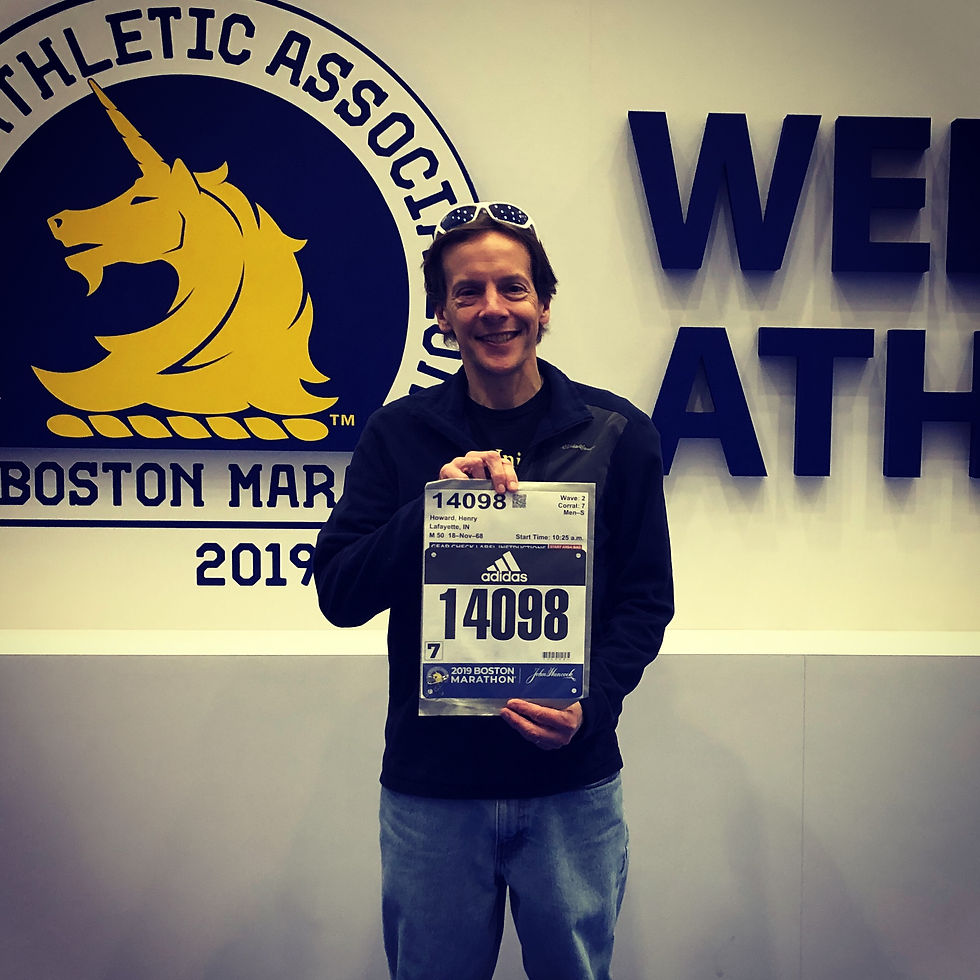
Qualifying for the Boston Marathon was among my early goals as a runner. After numerous attempts, I finally hit my qualifying time but it still was not enough to get me into the 2018 race. However, I requalified the following year, made the cut and finished the Boston Marathon in 2019.
I have also coached more than a dozen athletes to achieve Boston qualifying times and fulfill their dreams of running the historic race. For those wishing to make it to the Boston start line, there are numerous questions about qualifiers, how else to enter the race, the course and more.
What better way to honor the world’s most iconic race than with 26 questions — and one final half-question — that runners want to know? From qualifying standards to the unicorn on your medal, this Q&A answers everything you need to know.
Whether you’re chasing a BQ, already registered, or just dreaming about it, here are the questions runners ask most frequently along with the answers.
QUALIFYING & ENTRY
1. What are the Boston Marathon qualifying standards and does hitting the cutoff guarantee entry?

Boston is one of the only major marathons in the world that requires most runners to earn their spot. Qualifying standards are based on age and gender. As a general benchmark, men ages 18–34 must run a 3:00:00 or faster; women in the same age group must break 3:30:00. Times become more generous as you move into older age brackets.
Here’s the catch: meeting the standard gets you into the applicant pool. That does not guarantee a bib. Because demand far exceeds the roughly 30,000 available spots, the Boston Athletic Association (BAA) uses a rolling registration system that prioritizes the fastest qualifiers. In most years, runners need to be several minutes under their qualifying standard to actually secure entry. Checking the previous year’s cutoff numbers is a smart way to set your target.
Stay updated with the BAA official qualifying standards.
2. What is a Boston Qualifier (BQ), why do runners chase it and low long does it take to qualify for the Boston Marathon?
A BQ — Boston Qualifier — has become one of the defining goals in recreational running. For many marathoners, it represents years of dedication, structured training and sacrifice. It’s not just a time standard. It’s an achievement that is sometimes years in the making.
For most runners, qualifying takes multiple marathon training cycles. Running coaches typically recommend aiming for roughly 7–8% improvement per cycle rather than attempting a dramatic leap in a single race. A BQ can take two, three, or more years of serious training. And that is why qualifying for, racing and finishing Boston mean so much.
3. Can I run the Boston Marathon without a qualifying time?
Yes, there are two main paths. The first is a charity bib, where you fundraise a significant amount (often $5,000 or more) for one of Boston’s official charity partners. About one-fifth of all Boston Marathon spots are reserved for charities, sponsors and partner programs.
The second route is through an international tour operator, which secures a small allocation of entries for runners outside the standard registration system. Neither path is easy or cheap, but both are legitimate and widely used.

THE COURSE
4. Where does the Boston Marathon start and finish?
Boston is a point-to-point course, which creates some logistics preparation but offers memorable scenery. The race starts in Hopkinton, Massachusetts, and finishes on Boylston Street in the heart of Boston, near Copley Square. Along the way, runners pass through eight cities and towns: Hopkinton, Ashland, Framingham, Natick, Wellesley, Newton, Brookline and Boston.
5. How hilly is the Boston Marathon course?
More than most runners expect — and the hills work against you in sneaky ways. The total elevation gain is roughly 815 feet, but the total descent is around 1,275 feet, making it a significant net-downhill course overall. Only about 1.6 miles of the entire course is actually flat. You are either running uphill or downhill for nearly the entire 26.2 miles.
The first several miles out of Hopkinton drop noticeably, which can lull runners into going out too fast. Much later comes the infamous Newton Hills from miles 16 to 21. The course is not hilly in the way a mountain trail race is. However, the placement and cumulative nature of the elevation changes are what make Boston uniquely demanding.
6. What are the Newton Hills at the Boston Marathon, and why do they matter?
Miles 16 through 21 of the Boston Marathon feature four consecutive hills as the course winds through Newton.
None are exceptionally steep on their own — most are under a half mile long — but they arrive at exactly the worst moment: when your glycogen is running low and your legs are already fatigued from miles of downhill pounding. Additionally, due to Boston’s mid to late morning start for runners, many will find themselves hitting the Newton Hills during the heat of the day.
Here’s how to best deal with the Newton Hills: Train specifically for hills, pace yourself conservatively early during the race and time your carb and/or caffeine intake so that you can get a boost of energy as you approach the Newton Hills. Those who don’t prepare or go out too fast often end up slowing down considerably during and after the Newton Hills.
7. How did Heartbreak Hill get its name?

Heartbreak Hill is the last and most famous of the Newton Hills, cresting just past mile 20 near Boston College.
The name is widely attributed to the 1936 race, when defending champion Johnny Kelley caught up to leader Ellison “Tarzan” Brown, gave him a pat on the back, and Brown promptly surged away — breaking Kelley’s heart.
The name stuck, and the hill’s reputation grew. The good news: once you crest Heartbreak Hill, you have five mostly flat and downhill miles to the finish line.
That is part of the Boston Marathon’s rich history.
8. Does running the Boston Marathon course wreck your quads?
Yes. This surprises many first-timers, who assume the hills are the biggest threat to their legs.
The early downhill miles — particularly the first 3.5 miles out of Hopkinton — are actually harder on the body than the uphills. Running downhill forces your quadriceps to work in an eccentric (lengthening) contraction that generates significant muscle stress.
These early descents can quietly damage your quads before you’ve even reached the halfway point, causing legs to lock up in the final miles long before Heartbreak Hill ever appears.
This is why Boston-specific training always includes deliberate downhill running as a core part of race preparation.
TRAINING
9. How should training for the Boston Marathon differ from training for other marathons?
Prioritize hills first, speed second, and that includes downhill running specifically or running on rolling hills. Most standard marathon training plans are built for flat courses, which leaves runners underprepared for Boston’s constant elevation changes. Good Boston prep includes downhill repeats to condition the quads, long runs on rolling terrain and practicing goal pace on fatigued legs late in workouts.
Not only have I run Boston, I have trained a range of athletes for the race. While their training plans were customized to their specific fitness level, experience, goals and more, there were similarities such as the hills, speedwork and practicing running in different conditions whenever possible. Mid-April weather can mean just about anything, and historically it has for race day. Be sure to train in and be prepared for all types of weather conditions.
You might also want to check out the Official Boston Marathon Training Plans.
10. When should I start training for the Boston Marathon?
Timing depends on your experience level. Experienced runners with a strong base can begin their Boston-specific cycle about 12 weeks out from race day.
Runners with less of a training foundation should plan for 16 to 20 weeks. Starting too early risks burnout by March; starting too late leaves the body underprepared for the course’s demands.
11. What is the biggest pacing mistake runners make at the Boston Marathon?
Going out too fast in the early miles, which is an easy trap to fall into. The downhill out of Hopkinton, combined with the electric start-line energy, makes the first few miles feel deceptively easy.
Coaches, including me, tell their runners to not bank time. Every second you “save” in miles 1–5 will cost you two seconds or more in miles 22–26 or potentially more. The best Boston Marathon strategy is to run the first half conservatively, run the Newton Hills strong and as a test of patience, and give it all you got in the final five miles.
RACE WEEK
12. What should runners know about the Boston Marathon expo?

The expo takes place at the John B. Hynes Veterans Memorial Convention Center at 900 Boylston St., about a half-mile from the finish line. Bib pickup is mandatory in person. Bring a government-issued ID and your digital number pickup pass, which can be found in your registration email or the race app. Along with your bib, you’ll receive a souvenir T-shirt, race nutrition from sponsors, a gear check bag and a start line bag.
The expo also features a large adidas merchandise shop for official Boston Marathon gear. One insider tip: the iconic Boston Marathon jacket and other gear are also sold at nearby Dick’s Sporting Goods and at Fan Fest at City Hall Plaza. The jacket can also be ordered online.
The expo itself requires a lot of walking and time to make it through, after all 30,000 runners are picking up their bibs. Plan ahead so you are not on your feet too long.
13. What should runners do the week before the Boston Marathon?
The work is done. Keep in mind the taper is about protecting that fitness, not adding to it. Key priorities for race week:
Cut mileage significantly and shift your remaining runs to easy, short shakeouts.
Test your race-day shoes and outfit in a short run — nothing new on race day.
Walk as little as possible, especially Saturday and Sunday. Twenty thousand steps on the day before a marathon will cost you on Monday.
Plan your race morning in detail — lock in details about bus timing, breakfast logistics, gear and everything else. Aim to keep Sunday genuinely relaxed.
Don’t try anything new: no new foods, gels, supplements, or equipment.
14. What is the weather typically like on Boston Marathon race day?

April in New England is famously unpredictable. Conditions have ranged from the low 30s°F to the high 70s°F on race morning, and everything from brilliant sunshine to cold driving rain is on the table.
Literally the day before my race in 2019, the weather forecast looked miserable and eerily similar to the cold and rain the previous year when Des Linden won the Boston Marathon in a cold and windy downpour. However, by the time the race started, it was clear and just warm enough for a marathon.
However, a headwind is historically common, since the course runs generally east toward the ocean. The BAA monitors conditions closely and adjusts medical protocols based on the forecast.
The practical advice is to have a gear plan for multiple scenarios and make final decisions on throwaway layers the morning of the race based on the actual forecast.
RACE DAY LOGISTICS
15. What time does the Boston Marathon start?
The Boston Marathon uses a wave start system, with waves going off at different times throughout the morning. The wheelchair divisions start first, just after 9 a.m. The elite men’s and women’s fields start about a half-hour afterward. The first wave of qualifiers follow at 10 a.m., with the five subsequent waves departing at roughly 20-minute intervals. Your wave start time is printed on your bib and confirmed in pre-race communications.
Because the start is in Hopkinton, runners need to factor in travel time and plan to be on a bus that arrives before their wave. Plan your logistics in advance of race day.
16. How do runners get to the Boston Marathon start line in Hopkinton on race day?
Forget driving yourself or calling a rideshare. Roads into Hopkinton close early on Marathon Monday morning, and ride services are largely useless.
The official method is taking one of the free charter buses from Boston Common, included in your registration fee. Buses begin running very early in the morning. Most runners are up around 5 a.m. to eat, travel to the Common and board. Missing the bus window is not a scenario you want to experience. Plan your morning carefully and give yourself plenty of buffer time.

17. What should you pack for the start at the Boston Marathon in Hopkinton?
After the bus ride, runners hang out at the Athletes’ Village. That’s the large staging area in Hopkinton where runners wait before their wave.
The key rule: you can only bring items you’re willing to discard at the start line or carry for the entire 26.2 miles.
There are no bag storage options at the start corrals themselves (gear check bags are handled separately). Some items to considering bringing with you:
Old warm layers you’re ready to throw away at the start line, especially for cold or rainy mornings. I also wore an old pair of sneakers since rain threatened to make the Hopkinton area muddy (it was). I changed into my running shoes just before heading to the start line for my wave. These discarded clothes are donated to charity.
Your second breakfast. Most runners eat one meal at the hotel and pack additional food and fluids for the roughly hour-long bus ride and wait at the Athletes’ Village.
Sunscreen if it’s a warm day.
Your phone if you plan to carry it.
Gels and nutrition you’ll use during the race.
Be sure to arrive at the Athletes’ Village with everything you need and nothing you’ll regret carrying.
18. What waves and corrals does the Boston Marathon use?
Boston uses a wave start system with multiple waves, each divided into corrals numbered 1 through 8. Your wave is indicated by the background color of your bib; your corral number appears in a numbered box on the bib itself.
You’ll receive this assignment in your pre-race communications and can find it in the official race app. Start with your assigned wave and corral. You are not allowed to move forward.
19. Does the Boston Marathon have official pacers or pace groups?
No. Unlike many large city marathons, Boston does not use official pace groups.
If you’re running for a specific time goal, you’ll rely entirely on your own watch and pacing discipline. GPS signal is generally reliable throughout the course. This makes your pre-race pacing strategy — knowing your mile splits, how to handle the downhills and when to push versus hold back — more important than ever.
20. Are there aid stations at the Boston Marathon, and what do they offer?
Yes and they’re well-stocked. The BAA provides 26 aid stations strategically positioned along the course, each staffed with medical professionals offering care ranging from basic first aid to emergency treatment. Water stations begin at mile 2 and appear every mile after that, on both sides of the road. Lemon-lime Gatorade is also available throughout.
Note that the Boston Marathon does not allow personal hydration system products, weight vests or any sort of vest with pockets or water bladders.
Maurten Hydrogel (both regular and caffeinated versions) is offered at three points: miles 11.8, 17 and 21.5. Medical sweep buses are parked at aid stations for runners who need to withdraw from the race. Note: if you board a medical bus and it begins moving, you are no longer an official entrant and will not receive an official finish time.

21. What is the Wellesley Scream Tunnel at the Boston Marathon?
The Wellesley Scream Tunnel is one of the great joys of the entire course.
Just past the halfway mark, runners pass by Wellesley College, where students have lined the course for well over a century. The Scream Tunnel is exactly what it sounds like, a wall of noise so intense it can be disorienting.
Runners and spectators look forward to it every year as both a morale boost and a beloved piece of Boston Marathon tradition. It arrives at just the right moment, right as the Newton Hills are starting to loom.
SPECTATING & FAMILY
22. Where are the best places to watch the Boston Marathon as a spectator?
A few standout locations along the course offer a combination of drama and accessibility:
Newton Hills (miles 16–21): This is where races are won and lost. The crowd support here makes a genuine difference to runners.
Kenmore Square (mile 25): Electric energy with runners in the final push. Very close to the finish.
Wellesley Scream Tunnel (~mile 13): Festive and famously loud.
Because Boston is a point-to-point course, moving between spots requires planning. Public transit (the T) is your best tool.
Most experienced spectators pick two locations — a common choice is around mile 13 and mile 25 — and plan transit between them in advance. Don’t try to cross Boylston Street on race day. Roads close early and the logistics become a nightmare.
23. How do runners meet up with family after finishing the Boston Marathon?
Post-race reunions can be logistically chaotic. After crossing the finish line, runners are directed through a long finish chute toward the Family Meeting Area, which is organized alphabetically by the runner’s last name.
Set a meeting plan before race day — coordinating by phone in a crowd of 30,000 exhausted, space-blanket-wrapped runners is unreliable. Many experienced Boston runners find it simplest to agree on a hotel meeting point in advance, since many accommodations are within walking distance of the finish.
HISTORY & TRADITION

24. Why is a unicorn the symbol of the Boston Marathon?
The Boston Marathon has a rich history. But the unicorn question is frequently asked and the honest answer is that the full origin remains a bit of a mystery.
The Boston Athletic Association was founded in 1887 and chose the unicorn as its symbol when it held its first organized track and field competition in 1890, a full decade before the first Boston Marathon was run. The most likely explanation is that the unicorn was borrowed from the coat of arms of one of the BAA’s founding families, though that has never been definitively confirmed.
What has been confirmed is what the symbol came to mean.
In mythology, the unicorn represents an ideal, something worthy of pursuit, but which can never fully be caught. In that context, it’s a perfect symbol for athletic competition: the pursuit of excellence that drives you to run harder, train smarter and keep coming back. As one BAA official put it: “It’s the pursuit of the unicorn that makes you better and better and better.”
The unicorn appears on every Boston Marathon finisher medal to this day.
25. Why is the Boston Marathon held on a Monday?
The Boston Marathon takes place on Patriots’ Day, a Massachusetts state holiday observed on the third Monday of April.
The holiday commemorates the Battles of Lexington and Concord on April 19, 1775 — the opening engagements of the American Revolutionary War. The first Boston Marathon was run on Patriots’ Day in 1897, inspired by the marathon event at the first modern Olympic Games in Athens the year before.
The race has been run on that Monday ever since, making it one of the only major marathons held on a weekday and giving it a uniquely civic, holiday feel that no other race in the world quite replicates.
26. What is the history of women running the Boston Marathon?
It’s a story of persistence against resistance.
For decades, women were barred from competing. Bobbi Gibb became the first woman to run the full course in 1966, hiding near the start and joining the field after the gun. The following year, Kathrine Switzer registered with just her initials and became the first woman to officially enter. A race official physically actually tried to rip off her bib mid-race while she was running. She finished anyway.
Despite these pioneers, the AAU responded to Switzer’s run by banning women from competing in races against men.

Women were formally welcomed into the Boston Marathon starting in 1972, when Nina Kuscsik became the first official women’s champion.
The BAA retroactively recognized the unofficial women’s leaders from 1966 to 1971 in 1996. Today, women make up roughly 43% of the Boston Marathon field.
THE BONUS QUESTION
26.2 — Is the Boston Marathon worth the effort?
Ask anyone who has crossed that finish line on Boylston Street. The roar of the crowd in the final stretch, the weight of the medal with its unicorn emblem, the memory of cresting Heartbreak Hill with five miles to go — runners describe Boston differently than any other race.
It’s the only major marathon where nearly every participant genuinely earned their way to the start line. That changes what the finish line means.
Go get your BQ. We’ll see you in Hopkinton.



Comments